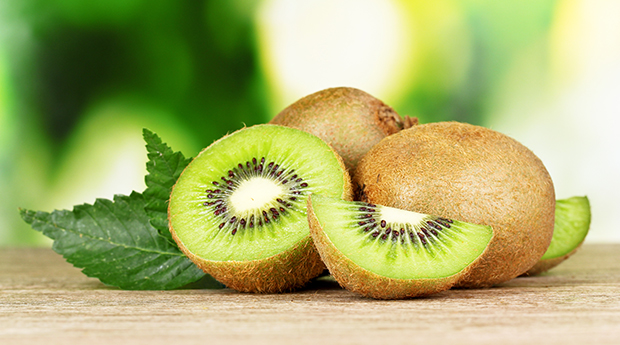
Kiwifruit are roughly 3 inches long and weigh about four ounces. The flesh is soft, almost creamy in consistency — and contains more vitamin C than an orange. Their bright green or golden flesh and tiny black seeds make them a striking ingredient in fruit salads, on cheese boards, and in pastry.
Green — bright, tangy, dependable. The classic kiwifruit: vibrant green flesh, a refreshing tartness balanced by sweetness, and excellent storage and shipping characteristics. A proven performer in established markets worldwide.
Gold — sweet, smooth, premium. Golden flesh with a sweeter, tropical flavour and smoother skin. Gold commands premium pricing and drives category growth — and it's where SNZI's breeding, including the low-chill H14, is focused.
Don Skelton — whose programme SNZI now stewards — bred more kiwifruit varieties than any other New Zealander. He is credited with developing approximately 40% of all kiwifruit Plant Variety Rights worldwide. Notable Skelton varieties include KiwiKiss, First Gold and ENZA Gold.
Across forty years, his work pushed kiwifruit in four commercially significant directions:
Kiwifruit is prized as one of the most nutrient-dense fruits available — an exceptional source of vitamin C, with useful dietary fibre, potassium and antioxidants. Gold varieties in particular tend to carry very high vitamin C levels alongside their sweeter taste.
For growers and marketers, that nutritional story — combined with SNZI's NO-GMO guarantee — is a compelling, health-forward proposition for today's consumers. Detailed nutritional panels per cultivar are available to licensees as part of our variety documentation.
A representative profile of what you'll find in a single serving of kiwifruit.
A single serving has nearly 2½× the recommended daily allowance.
Kiwifruit is fat-free.
One kiwifruit contains more dietary fibre than half a bowl of bran cereal.
A single serving carries more potassium than a banana.
Kiwifruit has a glycemic index of 52.
Each kiwifruit contains 15 mg of magnesium.
A kiwifruit provides 10% of the recommended daily intake.
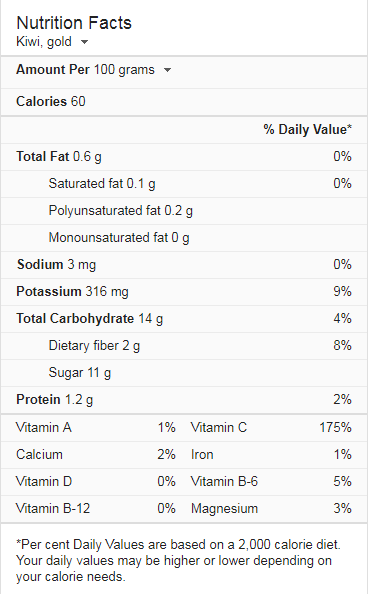
Detailed nutritional panels per cultivar are available to licensees as part of our variety documentation.